The Morning After: 23 Survivors and a Door That Wouldn't Open
At six o'clock on the morning of June 21, 1756, the guards came to open the lock-up. The door would not move. The weight of bodies pressed against it from the inside — dead men stacked upright against the frame, held in place by other dead men behind them — was too heavy to shift from the outside. It took twenty minutes for the survivors to drag enough corpses aside to clear the opening.
Twenty-three men staggered into the Bengal dawn. Their skin was covered in boils, the signature of acute heat stroke. Most could not stand without support. Their eyes were swollen, their mouths crusted. Behind them, the dead lay in a mass so tangled that individual bodies were difficult to distinguish. The guards stripped the corpses and threw them into an unmarked ditch outside the fort walls. No service. No names recorded. No count verified.
The man who would make this night immortal was among the twenty-three. John Zephaniah Holwell, the Company magistrate who had been left in command after the governor fled, walked out of the cell with the raw material for the most consequential piece of propaganda in British imperial history. Within two years, his account of what happened inside that room — a 14-by-18-foot chamber designed to hold three or four drunk soldiers overnight — would be cited in Parliament, reprinted in London newspapers, and used to rally an invasion force. The Black Hole of Calcutta became the moral blank check for the colonization of 300 million people.
The facts of the night were terrible enough. Dozens of men suffocated in a space where oxygen ran out within hours. That is a war crime by any standard. But what Holwell did with those facts — inflating the numbers, dramatizing the suffering, casting the Nawab as a deliberate torturer — transformed a tragic incident of negligence into the founding myth of the British Raj. The Black Hole is the definitive case study in how an empire weaponizes a story. The room was small. The lie was enormous.
The Siege of Calcutta: How the East India Company Provoked a War
Siraj-ud-Daulah and the East India Company's Unauthorized Fortifications
The British East India Company arrived in Bengal as merchants. By the 1750s, they were behaving like a government. Calcutta — then a cluster of villages along the Hooghly River — had become the Company's most profitable outpost, generating revenues that flowed directly to shareholders in London. The Company maintained its own army, collected its own taxes, and administered justice through its own courts. It was a corporation running a city, answerable to no local authority.
The friction point was Fort William. Fearing a coming war with the French — whose own trading company operated from nearby Chandernagore — the British began reinforcing the fort's walls and expanding its bastions. They did this without asking permission from the ruler of Bengal, Nawab Siraj-ud-Daulah, a 23-year-old who had inherited the throne only months earlier. Siraj was volatile, politically insecure, and surrounded by rivals plotting against him. The last thing he needed was a foreign corporation building a military installation in his territory without his consent. He ordered the British to stop. The British ignored him. They had been ignoring local rulers for decades, and it had always worked — through bribery, through bluster, or through the implicit threat of the Royal Navy. This time, it did not work. Siraj marched south with 50,000 troops.
The Fall of Fort William and Governor Drake's Escape
The Siege of Calcutta lasted four days and ended in humiliation. The fort's defenses, ironically the very fortifications that had provoked the attack, proved inadequate. The garrison was undermanned and poorly supplied. Worse, the leadership collapsed.
Governor Roger Drake, the highest-ranking Company official in Bengal, made a decision that would haunt British military memory for a century. On the night of June 18, as the Nawab's artillery pounded the walls, Drake boarded a ship in the river and sailed downstream to safety. He took the military commander and several senior officers with him. The women and children had already been evacuated. What remained was a skeleton garrison of soldiers, clerks, and civilians under the reluctant command of Holwell, a surgeon and magistrate with no military training.
Holwell held out for two more days. By the afternoon of June 20, with the walls breached and the situation hopeless, he surrendered. Siraj-ud-Daulah reportedly promised that the prisoners would not be harmed. The Nawab then retired for the evening. What happened next was almost certainly not an order from above, but a failure of the men below — junior officers who needed to secure the prisoners overnight and used the only lock-up available. The door was shut. The bolt was thrown.
What Happened Inside the Black Hole of Calcutta
The Dimensions of the Black Hole Prison Cell
The lock-up measured 18 feet by 14 feet — roughly 250 square feet of floor space, the size of a modest bedroom. It was a ground-floor cell at the southern end of the barracks, designed for petty offenders: soldiers who had been drinking, minor disciplinary cases. Two small barred windows opened onto a low veranda that blocked airflow from outside. The ceiling was low. The walls were stone.
Calcutta in late June sits at the threshold of the monsoon. Nighttime temperatures hover above 30°C. The humidity is crushing. Even outdoors, the air feels thick enough to chew. Inside a sealed stone room packed with human bodies, the physics are lethal. Each person generates roughly 100 watts of heat. The oxygen in 250 square feet of air — with only two barred windows for ventilation — would begin dropping within minutes once the room filled. The carbon dioxide would rise. Body temperature would spike. Delirium would follow.
Suffocation, Dehydration, and the Final Hours
The prisoners entered the cell confused. Some at the back laughed — it must be a joke, a temporary holding measure. The guards used musket butts to push the last men through the door. The laughter stopped when the bolt clicked.
Holwell positioned himself at one of the windows, a decision that likely saved his life. He described a wave of sweat breaking out simultaneously across every man in the room — not the gradual perspiration of discomfort, but a sudden, drenching flood as the body's thermoregulation system went into emergency mode. The thirst was immediate. Men tried to strip their jackets but could not raise their arms in the crush. Those in the center of the room, farthest from the windows, began climbing over others to reach air. The social hierarchy of the East India Company — officers, merchants, soldiers, clerks — dissolved in the dark. Rank meant nothing when oxygen was the only currency.
The guards, hearing the screams for water, brought animal-skin bags to the window bars. The bars were too narrow to pass the bags through. They poured water into hats held out by prisoners. This act of partial mercy triggered a stampede. Men trampled each other to reach the dripping hats. Holwell described guards holding torches to the bars to watch the spectacle — Englishmen clawing over each other like animals in a cage for a mouthful of water that mostly spilled onto the floor. The exertion of fighting for it burned through the remaining oxygen in the men's blood faster than the suffocation alone would have.
Some men sucked sweat from their own shirts. Others begged the guards to fire their muskets through the bars and end it. When the guards refused, some prisoners turned on each other. Holwell describes a period of delirium — men laughing, screaming insults at the Nawab, praying — before the room began to go quiet. The dead could not fall. They remained standing, held upright by the living pressed against them on all sides, swaying in the collective mass. Holwell eventually withdrew from the window, resigned to dying, and slipped into what he called a "stupor" — a painless drifting that ended only because, as the number of breathing men diminished, the air near him improved enough to keep him conscious.
John Zephaniah Holwell: The Man Who Created the Black Hole Legend
Holwell's Account: A Genuine Narrative of the Black Hole
Holwell published his account in 1758 under the title A Genuine Narrative of the Deplorable Deaths of the English Gentlemen and Others in the Black Hole. It was not a military report. It was a literary production — vivid, paced for maximum horror, and starring Holwell himself as the stoic hero who nearly sacrificed his life for his fellow prisoners.
The details he chose to include were precise and calculated. The water torture. The guards' laughter. The progressive stages of madness. The men who could not fall when they died. Every element was calibrated to produce revulsion in a London audience and sympathy for the Company men who had suffered under what Holwell framed as deliberate oriental cruelty. The Nawab, in Holwell's telling, was not an absent ruler whose subordinates made a catastrophic error — he was a sadist who ordered the confinement as punishment.
The centerpiece of the narrative was the number: 146 prisoners entered. 23 survived. 123 dead. The figure was round, shocking, and almost certainly false.
The Revised Death Toll: 64 Prisoners, 43 Dead
Historians began questioning the numbers as early as 1916, when J.H. Little published a landmark paper examining Holwell's claims against surviving muster rolls and casualty lists. The garrison had been small to begin with. Many soldiers had died in the fighting. A large contingent had fled with Drake. The arithmetic simply did not support 146 prisoners.
The modern consensus, anchored by Brijen Gupta's 1962 study, places the figure at approximately 64 prisoners, of whom roughly 43 died. The geometric argument reinforces this: 146 people in 250 square feet means less than 1.7 square feet per person. Bodies can be compressed to that density — Tokyo subway cars at rush hour approach it — but it is physically improbable that a door could be closed against that mass without being blocked instantly.
Forty-three men suffocating to death in a sealed room during a Bengal summer is still an atrocity. It is a failure of command, a violation of the treatment of prisoners, and a night of genuine horror for the men inside. The tragedy does not require inflation. But the truth — a local commander's negligence killing 43 — was not the story the British Empire needed.
Why Did Holwell Exaggerate the Black Hole Death Toll?
Holwell was not a disinterested witness. He was a Company employee seeking compensation, promotion, and above all, vindication. The British had lost Calcutta. Their governor had fled. Their garrison had surrendered to a force they publicly regarded as inferior. Returning to London with a story of military failure would have ended careers.
A story of demonic cruelty changed everything. If the Nawab was a monster who packed 146 innocents into a death chamber for sport, then the fall of Calcutta was not a failure of British strategy — it was a martyrdom. The Company men were not incompetent defenders; they were victims of barbarism. The distinction mattered enormously, because it determined whether Parliament would fund a retaliatory expedition or write off Bengal as a lost investment.
Holwell understood this. His subsequent writings on India were filled with further fabrications — invented Hindu texts, exaggerated personal achievements, self-serving revisions. He was, in the language of modern journalism, a serial fabulist who happened to survive a real catastrophe. The catastrophe gave his fabrications the weight of testimony.
How the Black Hole of Calcutta Justified the British Conquest of India
British Press Coverage and the Black Hole Propaganda
Holwell's narrative reached London in 1757 and detonated. The press did not report a military defeat — it reported a massacre. Editorials described the Nawab as a barbarian who had violated the laws of civilized warfare. The nuance of the conflict — the unauthorized fortifications, the provocations, the British mistreatment of Indian traders — vanished. All that remained was the image: Englishmen gasping for air in the dark while an Asiatic despot slept comfortably upstairs.
The propaganda served a specific commercial purpose. The East India Company was a private corporation, not the British government. To justify sending royal troops and warships to retake a commercial outpost on the other side of the world, the Company needed public outrage. The Black Hole provided it. Parliament approved the expedition not because Bengal was profitable — though it was enormously so — but because national honor demanded vengeance for the dead. The room had become a cause.
Robert Clive, the Battle of Plassey, and the Fall of Bengal
Robert Clive arrived from Madras with a small but well-equipped force, carrying the Black Hole as his rallying cry. His soldiers believed they were avenging a massacre. The emotional charge gave them a ferocity disproportionate to the strategic stakes.
The Battle of Plassey, fought on June 23, 1757 — almost exactly one year after the Black Hole — was less a battle than a transaction. Clive had bribed Mir Jafar, the Nawab's senior general, to defect with his troops at the critical moment. The actual fighting lasted hours; the betrayal had been arranged for weeks. Siraj-ud-Daulah fled and was later captured and executed by Mir Jafar's men. The Company installed Mir Jafar as a puppet Nawab, and Bengal's vast revenues — its textile trade, its agricultural surplus, its tax base — flowed into Company coffers.
Plassey is traditionally cited as the beginning of the British Raj, the domino that led to the colonization of the entire subcontinent. The moral foundation for this conquest was the 14-by-18-foot room. The British told themselves they were not conquerors but liberators — saving India from the kind of rulers who created the Black Hole. The room justified Plassey. Plassey justified Bengal. Bengal justified India. The chain of causation runs directly from a bolted door in June 1756 to the subjugation of a quarter of the world's population.
The pattern was not unique to Calcutta. Colonial powers across centuries built their moral architecture on similar foundations — a single incident of real or embellished violence used to justify decades of extraction. Elmina Castle, the Portuguese fortress on Ghana's coast that became the epicenter of the transatlantic slave trade, was originally built under the pretext of protecting traders from local aggression. Fort Santiago in Manila served the same function for Spain: a military installation dressed up as a defensive necessity, its dungeons filled with the people whose land it occupied. The Black Hole fit the template perfectly — genuine suffering repurposed as imperial permission.
The Black Hole of Calcutta Site Today: The GPO and the Holwell Monument
Kolkata General Post Office: Where the Black Hole Once Stood
The site of the Black Hole is buried beneath the Kolkata General Post Office, a white neoclassical building with a soaring dome that sits in B.B.D. Bagh — formerly Dalhousie Square, the administrative heart of British Calcutta. The old Fort William was demolished after the battle and a new fort built two kilometers south, on the banks of the Hooghly. The GPO was erected directly on top of the ruins in 1868.
To find the dungeon, you walk through the GPO's main archway, past the counters where clerks stamp parcels and process registered mail. Tucked into a corridor, often obscured by mailbags or leaning bicycles, is a set of brass rails embedded in the stone floor. These rails trace the perimeter of the original cell. They are the only physical marker. There is no museum, no interpretive panel, no reconstruction.
Standing inside the brass rectangle forces a specific cognitive dissonance. The space is impossibly small. You try to imagine 64 men — let alone 146 — pressed into this footage, and your spatial reasoning rebels. The room that justified the conquest of a subcontinent would not comfortably hold a mid-size family's living room furniture. The disproportion between the size of the room and the magnitude of the history it generated is the most disorienting thing about the site.
The Holwell Monument at St. John's Church, Kolkata
Holwell, characteristically, made sure his heroism was carved in stone. Shortly after the event, he erected a monument to the victims — and to himself — at the dungeon site. The monument listed the dead (using his inflated count) and credited Holwell with leading the survivors through the night.
The obelisk had a restless afterlife. In 1821, the Governor-General Lord Hastings ordered it demolished, judging it an inflammatory provocation that served no purpose beyond antagonizing the local population. The site went unmarked for eighty years. Then, in 1901, Viceroy Lord Curzon — a man who treated the British Empire as a personal curatorial project — ordered a replica built and installed at the original location.
It did not stay. By the 1940s, the Indian independence movement had reached full force, and the monument became a target. Subhas Chandra Bose and other nationalist leaders demanded the removal of what they called a "symbol of slavery." To prevent riots, the British relocated it to St. John's Churchyard, a quiet colonial-era cemetery a few hundred meters away. It stands there today — a wandering obelisk, built, torn down, rebuilt, and hidden, a monument that neither nation has ever known what to do with.
The parallel with other contested colonial memorials is exact. Robben Island wrestled with similar questions — how to preserve the architecture of oppression without celebrating it. Gorée Island faces the same historiographical debate: the "Door of No Return" has been questioned by scholars who argue the site's symbolic importance outstripped its actual role in the slave trade, much as Holwell's numbers outstripped the real death toll. In both cases, the power of the narrative outlived the precision of the facts.
Visiting the Black Hole of Calcutta Today
How to Visit the Black Hole of Calcutta Site
The Kolkata General Post Office is located at B.B.D. Bagh (Benoy-Badal-Dinesh Bagh), the former Dalhousie Square, in central Kolkata. It is open during standard postal hours — typically 10:00 AM to 5:00 PM, Monday through Saturday. There is no admission fee and no formal heritage signage. The brass rails marking the dungeon's perimeter are in the northeast corridor of the building; asking a clerk for directions is the most reliable way to find them.
St. John's Church, where the Holwell Monument now stands, is a five-minute walk south on Council House Street. The churchyard also contains the tomb of Job Charnock, traditionally credited as the founder of Calcutta (a claim the Calcutta High Court officially rejected in 2003). Both sites can be visited in under an hour.
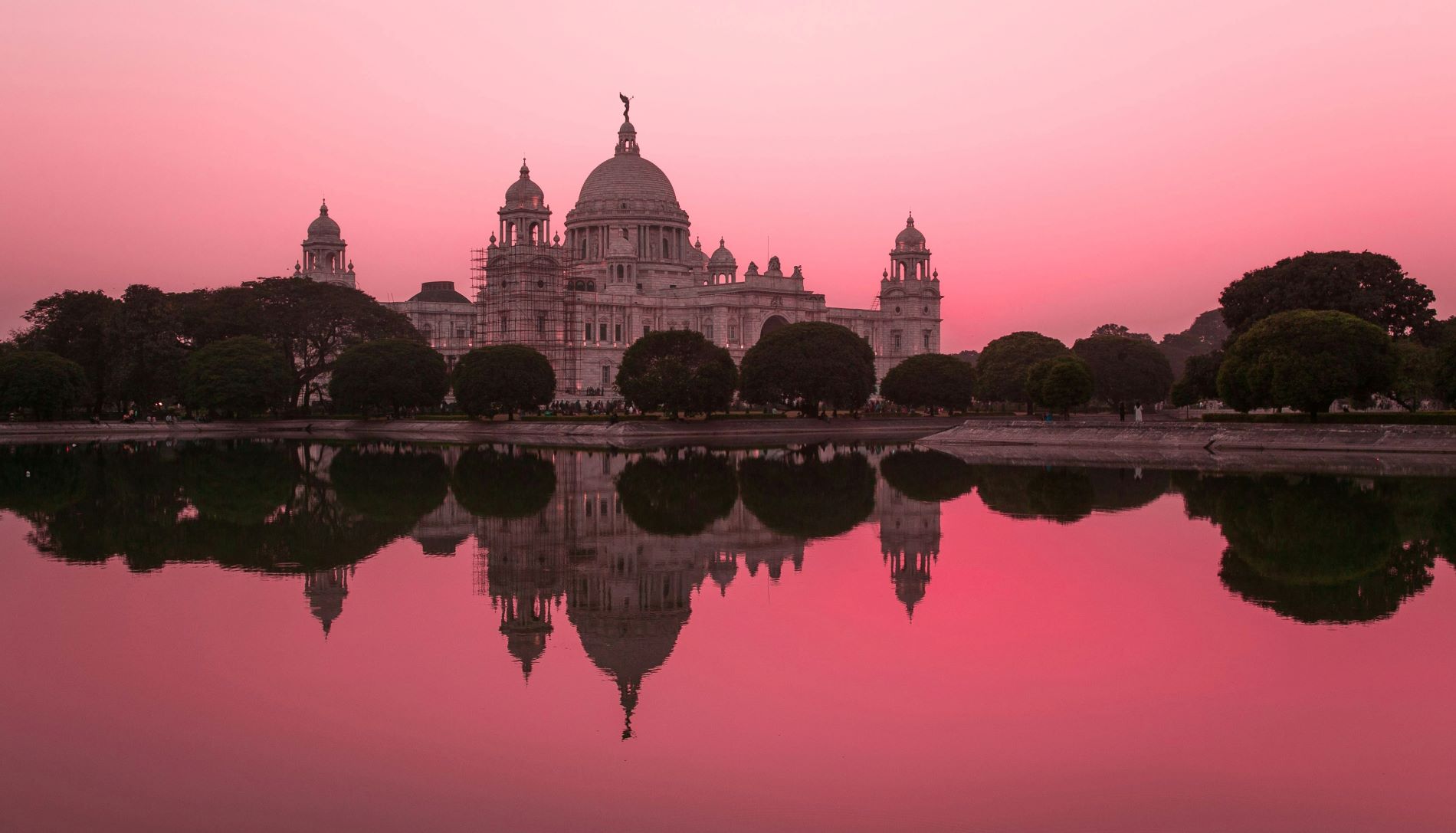
The new Fort William, built by the British after Plassey on the Maidan — Kolkata's vast central park — is an active Indian Army installation and closed to civilian visitors without military permission. The Victoria Memorial, a marble museum at the southern end of the Maidan, offers the most comprehensive collection of artifacts from the colonial period, including paintings depicting the siege.
For context beyond the imperial narrative, the Indian Museum on Sudder Street — one of the oldest museums in Asia — provides archaeological and cultural depth that the colonial sites deliberately omit.
What the Black Hole of Calcutta Means Today
The Black Hole of Calcutta does not exist anymore. The room was destroyed by the empire it helped create. The fort was demolished. The monument was moved. The site was paved over with a post office. What survives is the story — Holwell's story, inflated and dramatic and strategically false, which did more to shape the modern world than the room itself ever could.
Standing at the brass rails in the GPO corridor, you are standing at the birthplace of a narrative technology that empires have used ever since: take a real atrocity, amplify it, strip away the context that implicates you, and use the outrage to justify anything. The forty-three men who died in that room on the night of June 20, 1756, deserved to be remembered honestly. Instead, they were conscripted — dead — into a story that served the men who had abandoned them.
The horns of Kolkata traffic blare through the GPO's open doors. The humidity presses against your skin, the same humidity that killed those men 270 years ago. The room is gone. The lie it produced is still in circulation.
FAQ
What was the Black Hole of Calcutta?
The Black Hole of Calcutta was a small military lock-up inside Fort William, the British East India Company's headquarters in Bengal, India. On the night of June 20, 1756, after the fort fell to the forces of Nawab Siraj-ud-Daulah, dozens of British prisoners were confined in the cell overnight. The room measured only 14 by 18 feet and had minimal ventilation. By morning, the majority of the prisoners had died from suffocation, heat stroke, and dehydration. The incident became one of the most infamous events in British colonial history and was used as a justification for the subsequent conquest of Bengal.
How many people died in the Black Hole of Calcutta?
The original account by survivor John Zephaniah Holwell claimed that 146 prisoners were locked in the cell and only 23 survived, putting the death toll at 123. Modern historians have significantly revised these numbers. Based on analysis of garrison muster rolls and casualty records, scholars such as Brijen Gupta and J.H. Little estimate that approximately 64 prisoners were confined, of whom roughly 43 died. The geometric improbability of fitting 146 people into 250 square feet of floor space supports the lower figure. Holwell likely inflated the numbers to maximize the political impact of his account in London.
Who was John Zephaniah Holwell?
Holwell was a surgeon and magistrate employed by the British East India Company in Calcutta. He assumed command of Fort William's defense after Governor Roger Drake fled during the siege. As the most senior surviving officer, he surrendered to the Nawab's forces on June 20, 1756, and was among the 23 men who survived the night in the lock-up. His 1758 publication, A Genuine Narrative of the Deplorable Deaths of the English Gentlemen and Others in the Black Hole, became the definitive — and highly contested — account of the event. Holwell used the narrative to secure compensation and political influence, and his later writings on India contained numerous documented fabrications.
Did Siraj-ud-Daulah order the Black Hole imprisonment?
Most modern historians believe the mass confinement was not a deliberate order from Siraj-ud-Daulah. The Nawab reportedly promised Holwell that the prisoners would not be harmed before retiring for the evening. The decision to lock the prisoners in the inadequate cell appears to have been made by junior officers — the "Jemadars" — who needed to secure the captives overnight and used the only available lock-up. Holwell's account framed the Nawab as personally responsible, which served the propaganda purpose of casting the incident as an act of calculated cruelty rather than a bureaucratic failure.
Can you visit the Black Hole of Calcutta site today?
The original Fort William was demolished after the British retook Calcutta, and the Kolkata General Post Office was built on top of its ruins in 1868. The only marker of the dungeon's location is a set of brass rails embedded in the floor of a GPO corridor, tracing the perimeter of the original cell. There is no museum, no interpretive signage, and no admission fee. The Holwell Monument, originally erected at the dungeon site, was moved multiple times due to political controversy and now stands in the churchyard of St. John's Church, a short walk from the GPO.
How did the Black Hole of Calcutta lead to the British Raj?
Holwell's account reached London in 1757 and generated enormous public outrage, which the East India Company leveraged to secure parliamentary support for a military expedition to retake Bengal. Robert Clive led the campaign, using the Black Hole as a rallying cry, and defeated Siraj-ud-Daulah at the Battle of Plassey in June 1757 — largely through bribery rather than military superiority. Plassey gave the Company control of Bengal's vast revenues and is traditionally cited as the beginning of British colonial rule over the Indian subcontinent. The moral justification for this conquest rested substantially on the Black Hole narrative.
Sources
- A Genuine Narrative of the Deplorable Deaths of the English Gentlemen and Others in the Black Hole - John Zephaniah Holwell (1758)
- Sirajuddaullah and the East India Company, 1756–1757 - Brijen K. Gupta, E.J. Brill (1962)
- "The Black Hole — The Question of Holwell's Veracity" - J.H. Little, Bengal, Past and Present, Vol. 12 (1916)
- The Black Hole of Empire: History of a Global Practice of Power - Partha Chatterjee, Princeton University Press (2012)
- The Anarchy: The Relentless Rise of the East India Company - William Dalrymple, Bloomsbury Publishing (2019)
- Calcutta: A Cultural and Literary History - Krishna Dutta, Signal Books (2003)
- White Mughals: Love and Betrayal in Eighteenth-Century India - William Dalrymple, Viking (2002)
- The Honourable Company: A History of the English East India Company - John Keay, HarperCollins (1991)
- A New History of India - Stanley Wolpert, Oxford University Press (8th edition, 2008)
- Plassey: The Battle That Changed the Course of Indian History - Sudeep Chakravarti, Aleph Book Company (2020)