The Empty School: When the Footsteps Start in December
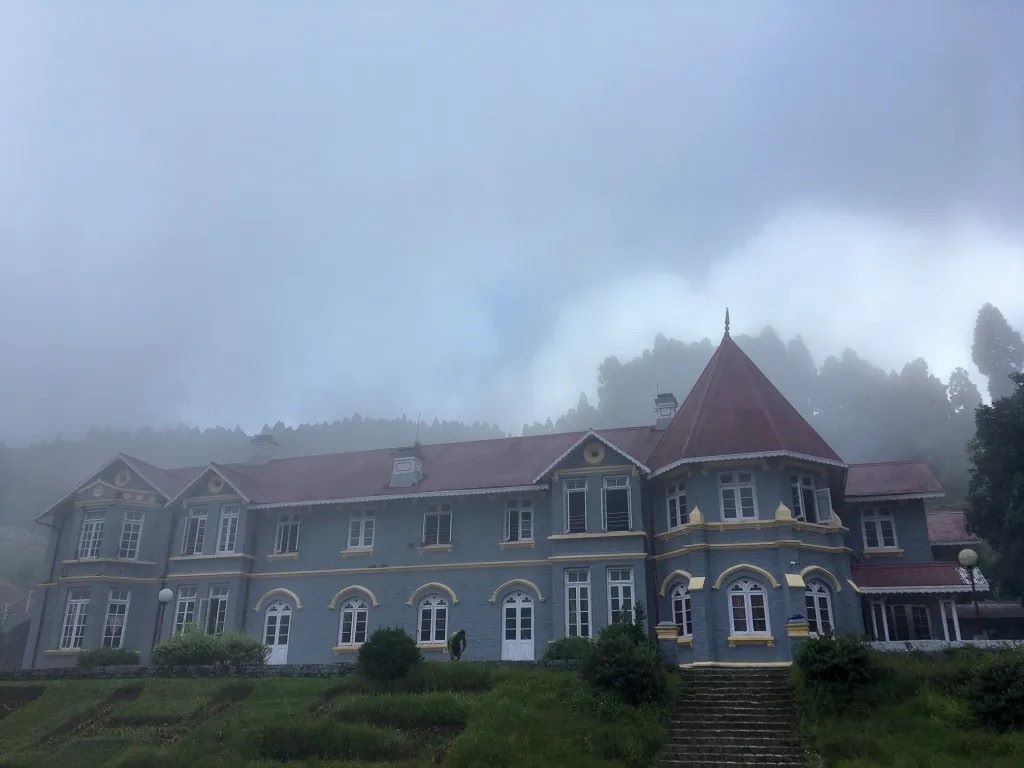
December in Kurseong, and the Victoria Boys' School is emptying out. Six hundred students pack their trunks, board buses down the mountain, and scatter across India for winter break. The caretaker locks the dormitories, checks the windows, bolts the main hall. By Christmas, the building is sealed — three stories of dark wood and Victorian stone sitting alone on a ridge at 4,864 feet, wrapped in Himalayan fog.
This is when the footsteps start. Not one set, but dozens — the rhythmic, regimented sound of boys marching through the main hall, audible from the road outside. Caretakers who have worked the winter shift for years describe the phenomenon with weary matter-of-factness: the doors are locked, the rooms are full of dust, and something walks the corridors from December to March. The marching stops when the students return.
Dow Hill is India's most concentrated haunting — a single forested ridge in the Darjeeling hills where a headless boy walks the road, locked schools echo with phantom footsteps, and local woodcutters refuse to work past mid-afternoon. The ghosts are Victorian. The children who created them were real. The British built these schools to warehouse the unwanted children of empire — six-year-olds separated from their parents for years at a time, raised in corridors designed to enforce silence and obedience. The isolation that made Dow Hill a perfect place to forget children is the same isolation that made it a perfect place for ghosts.
Kurseong and Dow Hill: The Geography of India's Most Haunted Ridge
The Hill Above the White Orchid Town
Kurseong takes its name from the Lepcha word Kurson-Rip — "Place of White Orchids." The town sits at 4,864 feet on the southern slopes of the Darjeeling hills, a transit point between the sweltering plains of Siliguri and the tourist infrastructure of Darjeeling. Most travelers pass through without stopping. Kurseong has always existed in Darjeeling's shadow — quieter, smaller, less developed, and far more isolated.
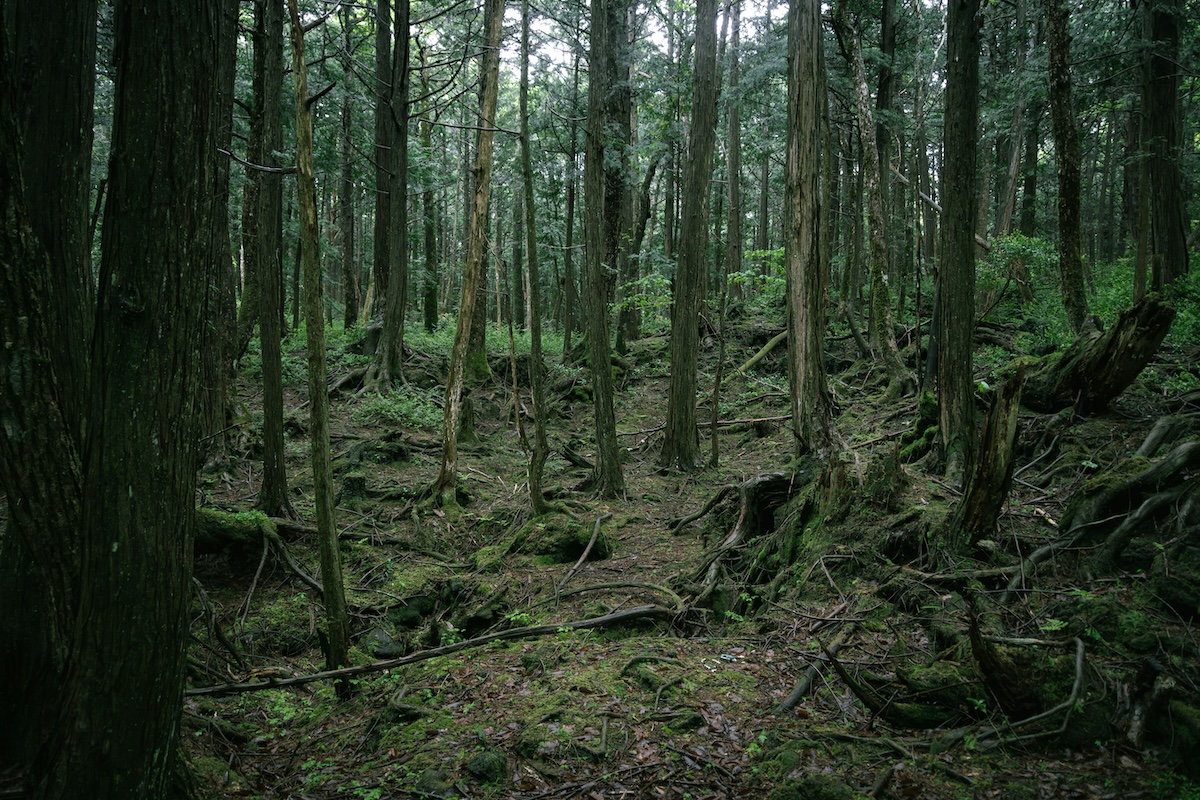
Dow Hill occupies the upper ridge above the town, physically separated from the main bazaar by a steep gradient and a shift in climate that feels like crossing a border. The lower town can be bright and warm while the ridge sits under cloud cover so thick it erases the tree line. The forest here is not native Himalayan jungle. It is a plantation of Cryptomeria japonica — Japanese cedar, introduced by the British — that grows tall, straight, and densely packed. The canopy blocks almost all sunlight. The floor is a carpet of brown needles. Visibility at ground level is high but endlessly repetitive: you can see far between the trunks, but every direction looks identical. The forest is a green labyrinth with no landmarks, no undergrowth, and very little sound.
This micro-climate — the perpetual fog, the unnatural silence of the monoculture forest, the cold air that sits heavier on the ridge than in the town below — is the foundation of everything that follows.
Victoria Boys' School and Dow Hill Girls' School: The Colonial Boarding Schools (1879)
The British Raj faced a domestic problem in the late 19th century: how to educate the children of officers and civil servants stationed in India without exposing them to tropical disease or, worse in the colonial mind, cultural "contamination." The solution was the hill station boarding school — institutions designed to replicate the rigid discipline of English public schools, transplanted wholesale into the Himalayas.
The schools at Dow Hill were established in 1879. The Victoria Boys' School and the Dow Hill Girls' School were not merely classrooms. They were holding facilities for the children of empire. Boys and girls as young as six were sent here, separated from their parents for months or years at a time, raised by strangers in a climate that was cold, wet, and dark for much of the year.
The architecture reinforced the discipline. The Victoria Boys' School is built in the Victorian Gothic style: high vaulted ceilings that trap cold air and amplify the smallest sound, dark wood paneling that absorbs light, long linear corridors designed for surveillance. A cough echoes. A footstep broadcasts. The building was engineered to make children feel watched at all times — a panopticon in stone and timber.
Disease was a constant presence. Outbreaks of cholera, typhoid, and influenza swept through the dormitories. Children died here, thousands of miles from their families in England, and were buried in the hill station cemeteries. The schools were factories of separation, loneliness, and suppressed grief. Whether or not one believes in ghosts, the raw material for a haunting is abundant.
The Ghosts of Dow Hill: The Headless Boy, the Death Road, and the Phantom Assembly
The Headless Boy of the Forest
The most persistent legend of Dow Hill belongs to the woodcutters and charcoal burners who work the Cryptomeria forest for their livelihood. The accounts are remarkably consistent across decades of retelling.
A woodcutter, working alone in the late afternoon, hears twigs snapping behind him. He turns to see a young boy sitting on a rock or walking between the trees. The boy appears normal at first — small, wearing what looks like an outdated school uniform. Then the boy turns, and the woodcutter sees that he has no head. In some versions, the figure has no face — a smooth, featureless surface where features should be. The figure does not attack. It follows, maintaining a fixed distance, sometimes producing a sound described as dry, mechanical laughter — like rustling leaves.
The woodcutters treat these encounters as occupational hazards. Most will not work past three o'clock in the afternoon. They say the forest "gets heavy" as sunset approaches — not darker, but denser, as if the air itself thickens. The pragmatic explanation is simple: the Cryptomeria plantation creates acoustic distortions. Sound travels unpredictably between the uniform trunks. A bird cry or a falling branch, reflected and refracted through the columns of wood, can sound like laughter or footsteps. In a forest where every direction looks the same and the fog erases depth perception, the mind fills in the blanks.
The woodcutters are unconvinced by the acoustics explanation. They have worked these woods for generations. They know what a falling branch sounds like. What they describe is something else.
The Death Road Between the Forest and the Schools
The stretch of road between Dow Hill Road and the Forest Office has earned the name "Death Road" — not because people die on it, but because of what people see. The road connects the civilization of the schools to the wildness of the forest, a liminal space that paranormal investigators describe as a threshold zone.
The reported phenomena are physical. Visitors describe sudden, severe temperature drops — cold enough to fog breath instantly, regardless of the ambient weather. There is a sensation locals call "The Push" — a physical pressure on the back or shoulders, as if an unseen crowd is trying to move the walker along the road. And there are the vanishing children: fleeting glimpses of small figures in school uniforms running across the road and dissolving into the mist before the witness can focus.
These are not the headless horrors of the deep forest. They are sadder — brief, translucent, and gone before they fully register. If the headless boy is Dow Hill's monster, the vanishing children are its melancholy. They are the residual image of the thousands of children who walked this road between dormitory and forest, between discipline and freedom, for over a century.
The Phantom Assembly and the Grey Boy in the Window
The winter-closure phenomena at Victoria Boys' School are the best-documented aspect of Dow Hill's haunting, precisely because they recur predictably every year. Caretakers report the sound of marching footsteps in the main hall — dozens of boys moving in formation, the rhythm of a school assembly. There are accounts of chanting or group prayer audible through locked doors.
The visual counterpart is the "Grey Boy" — a small, indistinct figure seen standing in the dormitory windows, looking out toward the forest. Witnesses describe the figure not as white or translucent, but as monochromatic — as if it drains the color from its surroundings. It does not move. It watches. The image is that of a child waiting for someone who will never arrive.
The school administration does not discuss the phenomena publicly. The official position is that Dow Hill's ghost stories are a nuisance that scares off prospective students and their families. The caretakers, who have no such institutional concerns, speak freely. They do their rounds quickly and leave before dark.
The Churail in the Pines: Local Folklore vs. Colonial Ghosts
Lepcha and Nepali Spirit Traditions on the Ridge
The Western framework of ghosts — the restless dead, the unfinished business, the spectral replay — is only one layer of Dow Hill's haunting. For the Lepcha and Nepali communities who have lived in these hills for centuries, the forest is inhabited by something older and more specific: the Churail.
In South Asian folklore, a Churail is the spirit of a woman who died in childbirth or through familial neglect. She is depicted with her feet turned backward — a detail designed to confuse anyone trying to track her through the forest. The Churail is predatory and vengeful, targeting lone men who walk the forest paths after dark, luring them off the trail with the sound of crying or singing.
The local understanding of Dow Hill's haunting is therefore layered. The colonial ghosts — the marching boys, the grey figure in the window — belong to the British. The Churail belongs to the land itself, a pre-colonial presence that the British boarding schools were built on top of without acknowledgment. The two hauntings coexist on the same ridge, each drawing from a different tradition, each reinforcing the other. The result is a place where no single explanation — colonial trauma, acoustic distortion, folk religion, or genuine supernatural presence — fully accounts for what people experience.
The tension between these frameworks mirrors what happens at Aokigahara at the base of Mount Fuji, where Shinto mythology, Buddhist tradition, and modern psychological crisis converge in a single forest. Both places resist tidy explanation. Both become more unsettling the more you learn about them.
Visiting Dow Hill: What to Expect and How to Get There
How to Reach Dow Hill from Darjeeling, Siliguri, and Kolkata
Kurseong is approximately 32 kilometers from Darjeeling and 50 kilometers from Siliguri. The most atmospheric approach is via the Darjeeling Himalayan Railway — the UNESCO-listed Toy Train that climbs from the plains through loops and switchbacks, stopping at Kurseong station in the center of town. Road access from Siliguri takes approximately two hours; from Kolkata, the journey is roughly 600 kilometers by road or a flight to Bagdogra airport followed by a two-hour drive.
Dow Hill itself is a short taxi or auto-rickshaw ride from Kurseong town center, ascending the ridge road past tea estates before entering the forest zone. Both schools are operational and not open to casual visitors during term time. The forest roads are accessible year-round, though the monsoon months (June–September) bring near-zero visibility and the heaviest fog. October through March offers clearer conditions and the winter closure period (December–March) when the school phenomena are most frequently reported.
There are no formal restrictions on visiting the forest, but no infrastructure exists on the ridge — no shops, no shelters, no lighting. The nearest accommodation is in Kurseong town. The Makaibari and Castleton tea estates, both within a few kilometers, offer a sharp contrast: sunlit, manicured, and hospitable, a world away from the fog on the ridge above.
The Forest, the Fog, and the Stories That Keep the Locals Away After Dark
Dow Hill's ghost economy is small but functional. Taxi drivers in Kurseong offer twilight runs up the ridge road, recounting the woodcutter stories with practiced timing. They are happy to drive the road slowly, point out the forest office, and wait while visitors photograph the fog. They will not, under any circumstances, enter the forest on foot after mid-afternoon. This refusal is Dow Hill's most convincing piece of evidence — the people who profit from the ghost story are too afraid to live it.
The schools deny everything. The woodcutters avoid the subject with strangers but adjust their working hours around it. The elders of the Lepcha and Nepali communities take a pragmatic position: the forest is "heavy," the ridge holds memory, and the smart response is respect, not investigation. They may not believe in the Victorian ghosts of the British boarding schools, but they believe the land remembers what was done to the children who were sent here to be forgotten.
Dow Hill is not a place where the supernatural announces itself with rattling chains and slamming doors. It is a place where the air is wrong — too cold, too still, too quiet — and where the mind, deprived of sensory data by the fog, begins to supply its own. Whether what it supplies is imagination or memory depends on what you believe about places that have absorbed a century of childhood loneliness and buried grief. The fog does not answer. It just stands there, exactly where the tree line ends, waiting for you to walk into it.
FAQ
Is Dow Hill really haunted?
Dow Hill is consistently ranked among India's most haunted locations. Local woodcutters, school caretakers, and residents report phenomena including phantom footsteps in empty school buildings, sightings of a headless boy in the forest, and unexplained temperature drops on the road between the schools and the forest. Skeptics attribute these experiences to the unusual acoustics of the Cryptomeria pine plantation, the disorienting effects of the persistent fog, and the psychological power of the location's reputation. The schools themselves deny the ghost stories.
What is the Death Road at Dow Hill?
The Death Road is a local name for the stretch of road between Dow Hill Road and the Forest Office in Kurseong, West Bengal. Visitors and locals report sudden temperature drops, a physical sensation of pressure on the back or shoulders, and fleeting sightings of children in school uniforms who vanish into the fog. The name does not refer to actual deaths on the road but to the unsettling experiences reported by those who walk it, particularly in the late afternoon and during the foggy winter months.
What is the story of the headless boy of Dow Hill?
The headless boy is the most persistent ghost legend associated with Dow Hill. Woodcutters working in the Cryptomeria pine forest report encountering a small figure in an outdated school uniform who, upon turning, reveals that he has no head or no facial features. The figure reportedly follows witnesses at a fixed distance, sometimes producing a dry, mechanical sound described as laughter. The legend is tied to the colonial boarding schools on the ridge, where children as young as six were separated from their families for extended periods and where disease claimed young lives regularly.
Can you visit the schools at Dow Hill?
The Victoria Boys' School and Dow Hill Girls' School are operational boarding schools and are not open to casual visitors during the academic term. The forest roads and surrounding areas are accessible year-round without restriction. The winter closure period from December to March, when the schools are empty and the phenomena are most frequently reported, offers the most atmospheric visit. There are no entry fees or formal permits required for the forest area.
How do you get to Dow Hill from Darjeeling or Kolkata?
Dow Hill is located on the ridge above Kurseong, approximately 32 kilometers from Darjeeling by road. From Kolkata, the journey is roughly 600 kilometers by road or a flight to Bagdogra airport near Siliguri, followed by a two-hour drive. The Darjeeling Himalayan Railway (Toy Train) stops at Kurseong station, offering the most scenic approach. From Kurseong town, Dow Hill is a short taxi ride up the ridge road.
Sources
- Darjeeling District Gazetteers — L.S.S. O'Malley, Bengal Secretariat (1907)
- The Darjeeling Himalayan Railway: Illustrated Guide for Tourists — Eastern Bengal State Railway (1896)
- UNESCO World Heritage Centre — Darjeeling Himalayan Railway documentation
- "Folklore and Customs of the Lepchas of Sikkim and Bengal" — C. de Beauvoir Stocks, Journal of the Asiatic Society of Bengal (1925)
- The Hill Stations of India — Marg Publications (2018)
- "The Haunted Hills of Kurseong" — India Today Travel feature
- "Chasing Ghosts in Dow Hill" — Outlook Traveller, first-hand accounts and local legends
- West Bengal Tourism — Official visitor documentation for Kurseong and Dow Hill
- The Statesman — Archival reporting on education in the Darjeeling hills
- Victoria Boys' School Alumni Archives — Memoirs and letters on early boarding school conditions