The Heart in the Silver Box: Bran Castle’s True Ghost Story
In the summer of 1940, a Romanian aide-de-camp wrapped a silver octagonal box in the flags of Romania and England and drove it across the country. Inside the box was the heart of Queen Marie of Romania — granddaughter of Queen Victoria, the woman who had transformed Bran Castle from a crumbling medieval garrison into a royal sanctuary filled with flowers and books and carved wooden furniture.
Marie had died two years earlier. Her last wish was medieval in its specificity: her body would be buried at the Curtea de Argeș Monastery, but her heart would rest separately, in a chapel at her beloved palace in Balchik on the Black Sea coast. The territorial cessions that followed the Second Vienna Award forced the heart to move. Bulgaria claimed Balchik. The aide-de-camp carried the silver box to Bran — to the mountain pass Marie had loved more than any other place in Romania.
The heart was placed in a niche carved into the rock of the Măgura Branului, across the valley from the castle, and later moved to a small wooden church in the castle park. This is the real ghost of Bran Castle — not a fictional vampire, but a monarch’s heart, traveling through a country at war, seeking a final resting place in the mountains. No fiction writer could improve on it. Yet most visitors never hear the story. They are too busy looking for Dracula.
The central thesis of Bran is written in that irony: a British novel published in 1897 by a man who never visited Romania has so completely colonized this building that the true history — Saxon military engineering, Ottoman border wars, a queen’s private sanctuary — struggles to be heard over the roar of its own myth.
The Saxon Origins of Bran Castle: A Medieval Fortress in the Carpathians (1377)
Why the Törzburg Pass Needed a Fortress
The castle exists because of the road beneath it. The Törzburg Pass (Bran Pass) is one of the few natural corridors cutting through the Southern Carpathians, linking Transylvania to Wallachia. In the medieval era, this was a commercial artery of immense value and a military choke point of terrifying vulnerability. Merchants moving goods from the German-settled cities of Transylvania to the Ottoman-influenced south had to pass through this narrow gorge.
On November 19, 1377, King Louis I of Hungary issued a privilege to the Saxons of Kronstadt (modern-day Brașov), granting them the right to build a stone castle at their own expense and with their own labor. The Teutonic Knights had built a wooden fortification nearby in the 13th century — the Mongols destroyed it. The Saxons built something the Mongols could not burn.
The Architecture of a Weaponized Toll Booth
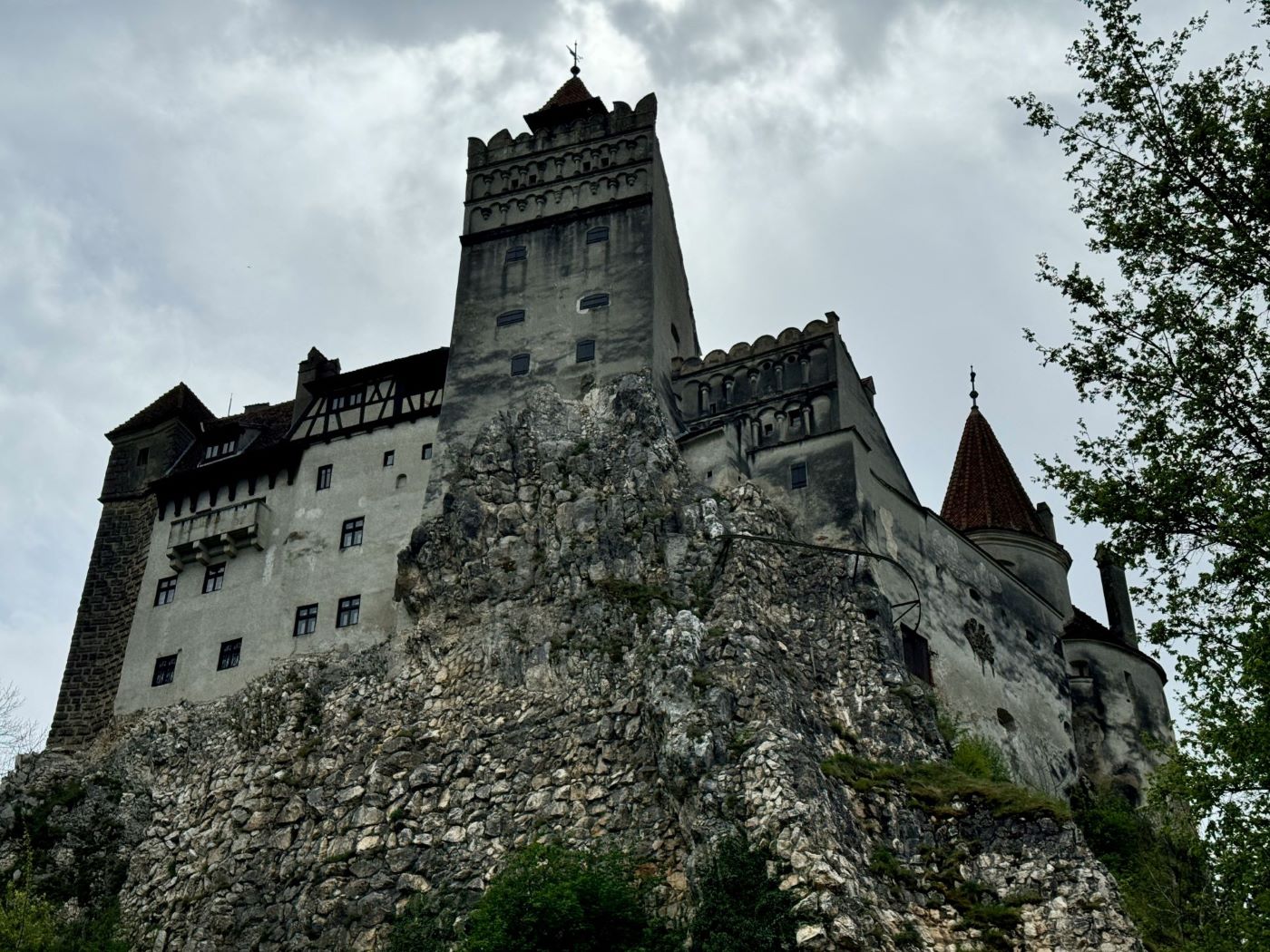
The building the Saxons raised was not a palace. It was a glorified, weaponized customs post — a border defense station where taxes were levied on goods and Ottoman raiders were monitored from firing positions cut into stone.
The architecture reflects this utilitarian origin. The walls are thick, built from river stone and brick. The windows were narrow slits designed for archers and crossbowmen, not for admiring the Carpathian view. The layout is a labyrinth of defensive logic: a central courtyard that could be sealed off, towers positioned to offer enfilading fire, and a secret passage connecting the first floor to the third — originally a military conduit for rapid movement between defensive levels.
For centuries, this was a cold, drafty machine of war. Soldiers slept in shifts, smelling of unwashed wool, woodsmoke, and anxiety, waiting for the signal fires that would announce a Turkish raid. There were no plush carpets, no libraries, and no velvet-lined coffins. The romantic isolation the world now associates with the castle is a fabrication. This place was a hub of bureaucracy, trade, and border friction.
Vlad the Impaler and the Dracula Connection: Separating Fact from Fiction
Did Vlad III Live at Bran Castle?
The tourist narrative desperately wants Vlad III Dracula (the Impaler), Voivode of Wallachia, to have lived at Bran. Tour guides equivocate with phrases like “legend says” and “it is believed.” The historical record is clear.
Vlad III did not live at Bran Castle. It was never his residence. His relationship with Bran was largely antagonistic — the castle was controlled by the Saxons of Brașov, with whom Vlad was frequently at war over trade disputes. He passed through the gorge, he burned the suburbs of the nearby city, and he may have laid siege to the fortress. The only credible link suggests Vlad was imprisoned in the castle’s dungeons for a few weeks in 1462 by the Hungarian King Matthias Corvinus, before being transferred to Visegrád near Budapest.
The real “Dracula’s Castle” — Poenari Castle — sits in ruins on a much steeper, more inaccessible cliff in Wallachia, largely ignored by the tour buses. Poenari is where Vlad actually lived, ruled, and fortified his position against the Ottomans. Bran is the castle that looks the part. It is a body double for a history that happened elsewhere.
How Bram Stoker Invented a Transylvanian Myth from a London Library
Bram Stoker never set foot in Transylvania. He constructed his geography from books, maps, and travelogues available in the British Museum — primarily Charles Boner’s Transylvania: Its Products and Its People (1865) and Emily Gerard’s The Land Beyond the Forest (1888).
Scholars believe Stoker saw an illustration of Bran Castle — a sketch of the fortress perched on its rock in the Törzburg Pass — and used it as the visual model for his antagonist’s lair. The description in the novel matches Bran’s topography with uncanny precision. Because the castle looked like the one in the book, it became the one in the book. The myth was born in the Victorian imagination, not the Carpathians, projected onto a blank canvas of Romanian stone.
Queen Marie of Romania and the Transformation of Bran Castle (1920–1938)
From Fortress to Royal Sanctuary: Queen Marie’s Architectural Alchemy
The castle’s purpose died with the border it guarded. After World War I, Transylvania united with Romania. The pass Bran had defended for centuries became an internal road. In 1920, the city council of Brașov — unable to afford the upkeep of the decaying fortress — gifted the castle to Queen Marie of Romania.
Marie, a granddaughter of Queen Victoria, saw past the cold stone and the military austerity. Working with Czech architect Karel Zdeněk Líman, she transformed the citadel with a style that was uniquely hers — an eclectic blend of Arts and Crafts, traditional Romanian peasantry, and Byzantine influences, often called the “Balcic Style” after her other palace by the Black Sea.
She whitewashed the gloomy stone walls, bringing light into oppressive interiors. She filled rooms with carved dark furniture, heavy woolen rugs, and icon lamps. She turned defensive towers into reading alcoves with window seats and hearths. She planted cascades of red geraniums in courtyards where soldiers once sharpened swords. In her diaries, she wrote of Bran as a place of peace — a sanctuary from the rigid protocols of the Bucharest court.
The contrast is the real tragedy of the site: the world comes looking for death and blood, but the castle was designed to celebrate life, flowers, and family.
The Secret Staircase: A Queen’s Shortcut to Her Library
One of the castle’s most famous features — hyped by tourist materials as a “vampire escape route” — is a narrow, steep stone passage hidden behind a false fireplace, connecting the first floor to the third. During Queen Marie’s residence, it served a purpose that would disappoint any horror fan: it was her private shortcut from the royal apartments to the library.
The stone is cold and polished smooth by millions of hands. The passage is tight, claustrophobic, steep. But it was built for a queen in search of a book, not a count fleeing sunlight. It captures the castle’s duality perfectly — a structure built for war, repurposed for the quiet leisure of reading.
The Communist Seizure and the Restitution of Bran Castle
Expropriation, Neglect, and the Heart in a Basement
The royal idyll ended in 1948. The newly installed communist regime seized the castle. Princess Ileana, Marie’s daughter, was expelled from Romania. The furniture was dispersed. The castle was stripped of its royal identity and converted into a state-run museum of “feudal history,” its connection to the monarchy scrubbed by socialist propaganda.
Queen Marie’s heart suffered the most indignant fate. Removed from the wooden church at Bran, it was transferred to the National History Museum in Bucharest, where — according to multiple accounts — it spent years in a plastic box in a basement storage room. A monarch’s heart, wrapped in the flags of two nations, reduced to an uncatalogued artifact in communist storage.
After the fall of Ceaușescu and a long legal battle, the castle was restituted to the Habsburg heirs — Archduke Dominic von Habsburg and his sisters — in the 2000s. Today it operates as a private enterprise, caught between the preservation of the royal legacy and the overwhelming market demand for vampires.
The Dracula Industrial Complex: Tourism, Commerce, and the Myth Economy
How Fiction Colonized a Real Place
Bran Castle receives approximately 800,000 visitors per year. The entire village of Bran relies on what might be called the “Dracula dollar.”
The path to the castle gate — locals call it “The Gauntlet” — forces visitors uphill through a chaotic bazaar of wooden stalls. The air smells of fried dough and kürtőškalács (chimney cake). The visual field is cluttered with plastic vampire fangs, bottles of “Vampire Wine” with tacky red-foil labels, T-shirts screaming “I Survived Dracula’s Castle,” and magnets of Vlad the Impaler looking annoyed to be there. Above sits a genuine 14th-century fortress, a veteran of Ottoman wars and a sanctuary for royalty. Below lies a carnival of kitsch, trading on the reputation of a fictional count who never existed, from a book written by a man who never visited.
The castle administration has made admirable efforts to correct the record. The signage inside is historically accurate. The Queen Marie rooms are carefully maintained. The Teutonic origins are documented. They are fighting a losing battle. The economy outside the walls pumps the myth full of steroids while the museum inside the walls tries to deflate it. The relationship is symbiotic but corrosive: the lie pays for the preservation of the truth.
The failed attempts to build a massive “Dracula Theme Park” nearby — proposed multiple times, rejected each time — capture the tension. Romania’s relationship with the Dracula brand is one of dependence and embarrassment in roughly equal measure.
Visiting Bran Castle — The Atlas Entry
What to Expect and How to Find the Silence
The castle itself is small — built for a garrison of perhaps a few dozen soldiers, not for 800,000 annual visitors. In peak season (July and August), the narrow corridors become gridlocked. The intimacy of Queen Marie’s rooms is lost when viewed over the shoulder of a stranger taking a selfie.
The solution is seasonal. Visit in winter — November, January, or February. When snow covers the Carpathians, the souvenir stalls shutter early. The crowds vanish. The castle stands stark and black against the white peaks. The cold is biting — the building is notoriously difficult to heat — but the chill adds an authenticity that no summer visit can replicate. On a Tuesday afternoon in January, the plastic fangs fade and the spirit of Queen Marie returns.
Tickets cost approximately 60–70 RON (€12–14). Buying online in advance is recommended. The “Time Tunnel” — a glass elevator installed in the dried-out well shaft — descends 30 meters into the bedrock and delivers visitors to a multimedia exhibition in the park below.
For those seeking the real Vlad, Poenari Castle in Wallachia requires a strenuous hike but offers the historically accurate fortress — and no souvenir stalls.
Romania’s Darker Layers — Nearby Dark Atlas Sites
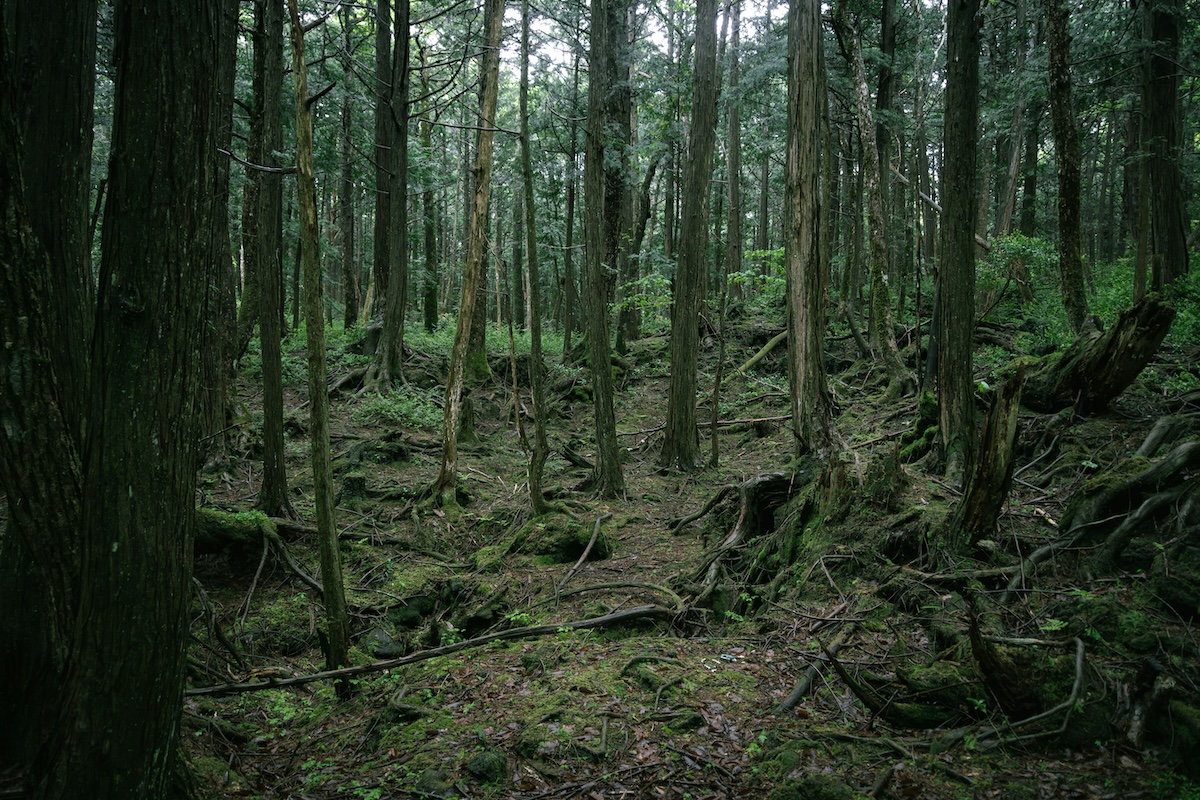
Bran shares Romania with sites that carry their own weight of myth and darkness. Hoia Baciu Forest, near Cluj-Napoca, is considered the most haunted forest in the world — a place where trees grow in inexplicable spirals, a dead clearing defies botanical explanation, and a military technician risked his career in 1968 to photograph a UFO above the canopy. The Palace of the Parliament in Bucharest — Ceaușescu’s megalomaniac monument — demonstrates what happens when a dictator’s architectural ego consumes an entire city quarter. And Neuschwanstein Castle, though in Bavaria rather than Romania, offers the closest thematic parallel: another fairy-tale castle whose myth has completely consumed its history.
The building at Bran endures its own myth with the patience of medieval stone. The vampire never lived here. The queen did. Her heart, in its silver box, is the only ghost worth seeking.
Frequently Asked Questions
Is Bran Castle actually Dracula’s home?
Bram Stoker never visited Transylvania and likely based his fictional castle on sketches and descriptions of Bran found in British libraries. The historical Vlad the Impaler never lived at Bran Castle — his only connection is a possible brief imprisonment in the dungeons in 1462. The castle became synonymous with the novel because it matched the physical description, not because of any historical link. Vlad’s actual fortress was Poenari Castle in Wallachia.
Who is the real historical figure associated with Bran Castle?
Queen Marie of Romania is the defining figure in the castle’s history. In 1920, the city of Brașov gifted the fortress to the queen, who transformed it from a cold military garrison into a beloved royal summer residence. She oversaw extensive renovations in her signature “Balcic Style,” whitewashing the interiors, adding carved furniture and flowers, and turning defensive towers into reading alcoves. She described Bran as a place of peace in her diaries.
What happened to Queen Marie’s heart?
Queen Marie requested that her heart be buried separately from her body after her death in 1938. Originally interred at her palace in Balchik on the Black Sea, the heart was relocated to Bran in 1940 after Bulgaria claimed the territory. It was placed in a silver octagonal box, wrapped in Romanian and English flags, and buried in the castle grounds. During the communist era, the heart was moved to the National History Museum in Bucharest, where it was stored in a basement for years.
What is the secret staircase at Bran Castle?
A narrow, steep stone passage hidden behind a false fireplace connects the first floor to the third floor. Originally built as a military conduit for rapid movement between defensive levels, it served as Queen Marie’s private shortcut between her apartments and the library during the royal residence period. Despite its marketing as a “vampire escape route,” its actual history is domestic rather than supernatural.
Where is the real castle of Vlad the Impaler?
Poenari Castle, located on a steep cliff in Wallachia, is the historically accurate fortress of Vlad III. Unlike Bran, which is well-preserved and commercially accessible, Poenari is largely in ruins and requires a demanding hike to reach. It receives a fraction of Bran’s visitors despite being the genuine article.
When is the best time to visit Bran Castle?
Winter months — November, January, or February — offer the best experience. Summer crowds fill the narrow corridors to capacity, destroying the atmosphere. In winter, the souvenir stalls close early, the tourists vanish, and the castle stands in silence against snow-covered peaks. The cold is part of the authenticity.
Sources
- Transylvania: Its Products and Its People — Charles Boner (1865)
- The Land Beyond the Forest — Emily Gerard (1888)
- The Story of My Life — Queen Marie of Romania (memoir)
- The Last Romantic: A Biography of Queen Marie of Romania — Hannah Pakula, Simon & Schuster (1984)
- Southeastern Europe in the Middle Ages, 500–1250 — Florin Curta, Cambridge University Press (2006)
- Dracula: Sense and Nonsense — Elizabeth Miller, Desert Island Books (2006)
- The Dracula Dilemma: Tourism, Identity and the State in Romania — Duncan Light, Ashgate (2012)
- Atlas Obscura: The Heart of Queen Marie — feature article on the relocation of the queen’s heart
- Bran Castle Official Site — visitor information and historical documentation
- Romania Tourism (Official) — travel logistics and heritage context