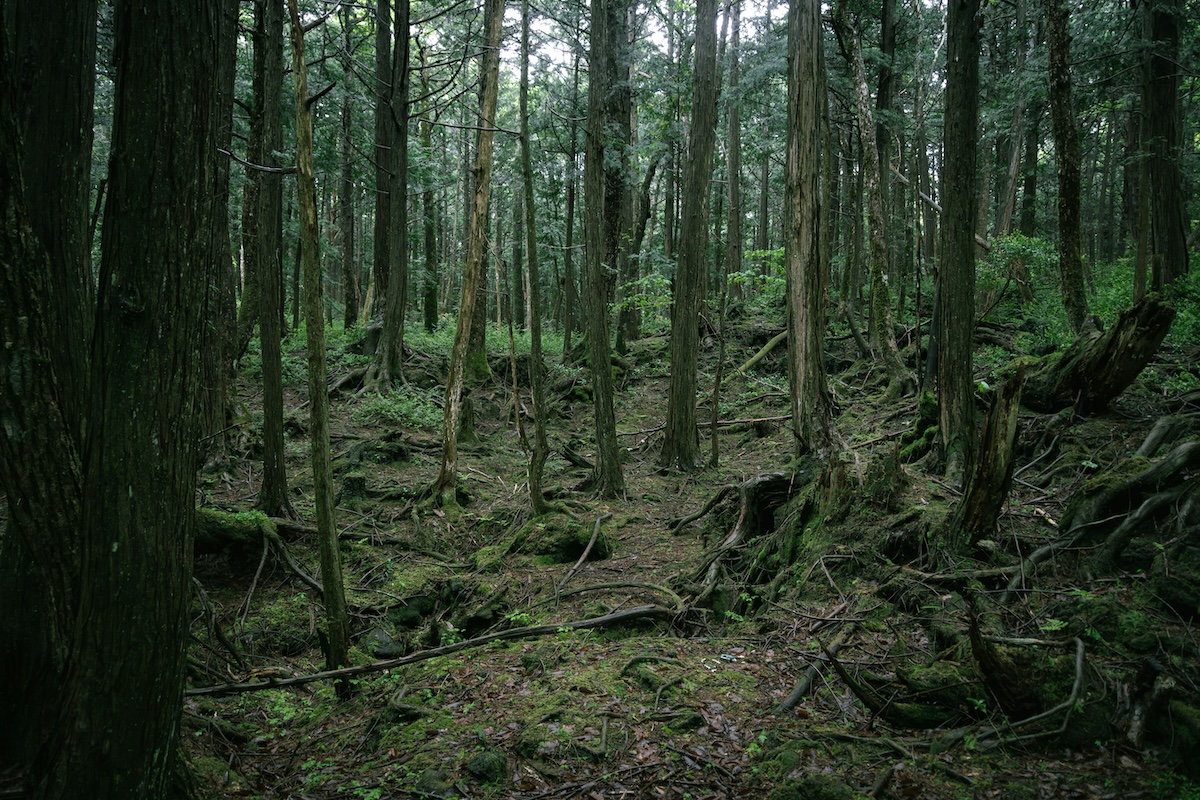
The Government Warning: India's Only Fort with a Legal Curfew Against Ghosts
The first thing a visitor encounters at Bhangarh Fort is not a gate, a temple, or a ruin. It is a yellow metal sign bolted into the earth by the Archaeological Survey of India (ASI) — the same government body that manages the Taj Mahal, Hampi, and the Ajanta Caves. The text, printed in Hindi and English, is blunt: "Entering the borders of Bhangarh before sunrise and after sunset is strictly prohibited. Legal action would be taken against anybody who does not follow this instruction."
No other protected monument in India carries this restriction. The ASI has never publicly explained the reasoning. The official line is "safety" — the ruins are unlit, the terrain uneven, wild animals from the nearby Sariska Tiger Reserve roam after dark. But the local villages tell a different story. The curfew exists because the dead occupy the fort at night, and anyone who stays past sunset does not come back whole.
This is the central paradox of Bhangarh: a secular, modern government has, in legal effect, endorsed a ghost story. The sign does not mention structural danger or wildlife. It mentions nothing at all — just the prohibition and the threat of prosecution. The silence is the endorsement. And it is that silence, more than any legend, that has made Bhangarh the most famous haunted site in India.
The truth beneath the ghost stories is more prosaic and, in its own way, more unsettling. Bhangarh was a thriving Rajput city that died slowly — drained of its population by political neglect, environmental stress, and military vulnerability. The curses came later, invented to explain a silence that history alone could not fill. The fort endures not because of what it was, but because of what people need it to be: proof that the dead can punish the living.
The Founding of Bhangarh Fort: A Rajput City in the Aravallis
Raja Bhagwant Das, Madho Singh, and the Construction of a Walled City (1573)
Bhangarh was founded in 1573 by Raja Bhagwant Das of Amber, who built the fort as a seat for his second son, Madho Singh. Madho Singh's elder brother was the celebrated Man Singh I, one of Emperor Akbar's nine Navratnas — the jewels of the Mughal court — and the general who commanded Mughal armies from Kabul to Bengal. Madho Singh was the lesser sibling: loyal, competent, but permanently overshadowed. Bhangarh was his consolation prize, a fortified city carved into the Aravalli hills where he could rule a minor domain while his brother shaped the empire.
The location was strategic. The fort sat at the edge of what is now the Sariska Tiger Reserve, controlling trade routes between Delhi and Ajmer through the Aravalli passes. The terrain provided natural defense — craggy hills on three sides, dense scrub forest below. Madho Singh designed Bhangarh not as a military outpost but as a complete walled city: five gates (the Lahori, Ajmeri, Phulbari, Delhi, and the main Ganesh Pol), a bazaar district, residential quarters for nobles and merchants, administrative buildings, and a complex of Hindu temples. At its peak, the city supported roughly 10,000 residents and over 9,000 houses.
The temples — dedicated to Gopinath, Someshwar, Hanuman, Keshav Rai, and Mangla Devi — were built in the Nagara style, with the Gopinath Temple raised on a 14-foot plinth and decorated with carved yellow sandstone. The religious architecture was sophisticated enough to rival larger Rajput capitals. Bhangarh was not a frontier garrison. It was a city built to last.
The Political Abandonment: Ajab Singh Moves to Ajabgarh
Madho Singh's son Chhatra Singh succeeded him, and after Chhatra Singh's death around 1630, the slow decline began. The decisive blow was political, not supernatural. Chhatra Singh's son Ajab Singh built a new fort — Ajabgarh — on a hilltop several kilometers away and relocated his court there. The move drained Bhangarh of royal patronage, administrative function, and the economic activity that depended on both.
The pattern is common across Rajasthan. Dozens of Rajput settlements were abandoned when rulers shifted their capitals — Kumbhalgarh, Ranthambore, and Amber itself all experienced periods of decline when political gravity moved elsewhere. Bhangarh's abandonment was not unique. What was unique was the completeness of it. By 1783, a devastating famine struck the Alwar region, and the remaining population scattered. By 1800, the city was empty. The temples still stood. The houses did not. And no one could explain why the gods had been spared but the people had not — unless someone, or something, had cursed the human inhabitants specifically.
The legends filled that gap.
The Two Curses of Bhangarh: How a Dying City Got Its Ghost Story
The Ascetic's Condition: Guru Balu Nath and the Shadow That Must Not Fall
The older legend belongs to Guru Balu Nath, an ascetic who meditated on the hillside where the fort was built. Balu Nath granted permission for the construction on a single condition: no structure could be raised high enough to cast its shadow upon his dwelling. The shadow of human ambition must never fall on the house of a holy man.
For decades, the covenant held. The fort grew horizontally — wide courtyards, sprawling bazaars, single-story havelis. Then Ajab Singh, the grandson who would later build Ajabgarh, raised the height of the palace fortifications. The shadow of the new walls crept across the hillside and touched the ascetic's home. Balu Nath cursed the city: every roof would collapse, every dwelling would empty, and no human would inhabit the fort again.
The legend explains a real architectural anomaly. Nearly every residential structure in Bhangarh is roofless — walls standing, rooms defined, but no ceiling overhead. The temples, which were presumably built with the ascetic's blessing, retain their roofs and structural integrity. Locals insist that any attempt to build a new roof within the fort perimeter ends in collapse. The curse, they say, is still active.
The Tantrik and the Princess: Singhia, Ratnavati, and the Enchanted Oil
The more famous legend is a love story that ends in annihilation. Princess Ratnavati, said to be the most beautiful woman in Rajputana, attracted suitors from across the subcontinent. Among those who desired her was Singhia, a tantrik — a practitioner of dark ritual arts — who lived in the hills above Bhangarh.
Singhia knew he had no chance with the princess through conventional means. He waited for an opportunity and found one in the marketplace. Watching Ratnavati's maid purchase attar — fragrant oil — from a vendor, Singhia cast a spell on the bottle, a love charm designed to make the princess fall irresistibly in love with him the moment the oil touched her skin.
Ratnavati discovered the deception. Accounts vary on how — some say she saw Singhia lurking near the stall, others that she sensed the enchantment herself. She took the bewitched bottle and hurled it onto a massive boulder. The spell transferred to the stone. The boulder rolled down the hillside, gathering speed, and crushed Singhia beneath it.
Pinned under the rock, dying, the tantrik spoke his final words. He cursed Bhangarh and everyone in it — princess, court, soldiers, merchants, children — to destruction. No soul would survive, and none would be reborn. The city would stand forever as an empty monument to his vengeance. Within a year, according to the legend, Bhangarh was invaded and the entire population, including Ratnavati, was killed. The curse was fulfilled. The city fell silent.
The legend echoes a pattern that appears across cultures: the scorned outsider whose dying curse destroys the community that rejected him. Ochate, the abandoned Basque village in Spain, carries a similar folklore structure — a place where unexplained death and disappearance were attributed to witchcraft rather than the more mundane causes that actually emptied the settlement. The curse provides narrative closure where history provides none.
What Actually Happened to Bhangarh: Famine, Invasion, and the Collapse of a Kingdom
The Mughal Invasions and the Depopulation of Alwar
The historical record offers explanations that require no sorcery. The 18th century was catastrophic for the minor Rajput kingdoms of the Aravalli region. The decline of Mughal central authority after Aurangzeb's death in 1707 created a power vacuum that was filled by Maratha incursions, Jat rebellions, and internecine Rajput warfare. Bhangarh, a minor fort without the military resources of Amber or Jaipur, was vulnerable to all of them.
The region around Alwar changed hands repeatedly during the 18th century. Each transition brought disruption to trade routes, agricultural systems, and the fragile economic networks that sustained smaller settlements. Bhangarh, already weakened by the loss of its court to Ajabgarh, had no political patron to defend it and no strategic value worth fighting over.
Water Scarcity and Agricultural Collapse in the Aravallis
The environmental explanation is equally compelling. The Aravalli hills are semiarid terrain, dependent on monsoon rains and seasonal streams. Extended drought periods in the 18th century — well-documented across Rajasthan — devastated agriculture in the region. The famine of 1783, which killed tens of thousands across Rajputana, likely delivered the final blow to any remaining population in Bhangarh.
The pattern repeats across the region. Craco, the medieval ghost town sliding off a hillside in southern Italy, was emptied by the same combination of forces — agricultural decline, repeated earthquakes, and the slow drain of population to larger cities. No curse required. Just the ordinary, brutal mathematics of a settlement that could no longer sustain itself.
Bhangarh's ghosts were born in that gap — the space between what the ruins show (a city that clearly thrived) and what the historical record explains (a decline too gradual and too ordinary to satisfy the human need for dramatic causation). The curses transformed a slow death into an instant one, a bureaucratic failure into a cosmic punishment.
Inside the Ruins of Bhangarh Fort Today
The Temples That Survived and the Houses That Didn't
The most unsettling feature of Bhangarh is the architectural disparity. The Hindu temples — Gopinath, Someshwar, Mangla Devi, Hanuman, Keshav Rai — remain structurally intact. Their walls stand, their carvings survive, their plinths hold. The Gopinath Temple still rises on its 14-foot base, its arched colonnades intact after four centuries. The Someshwar Temple retains a functioning stepwell beside it.
Every residential structure is a shell. Walls define the rooms of havelis, merchants' homes, and the sprawling Jauhari Bazaar — the old marketplace — but no roof covers any of them. The floor plans are visible from above like an architect's blueprint rendered in stone. Lanes are still traceable. Doorways still frame nothing. The domestic city is a skeleton; the sacred city is intact.
The structural explanation is straightforward: temples were built with heavier stone, vaulted construction techniques, and thicker walls designed to support sculptural weight. Residential buildings used lighter roofing materials — timber, thatch, lime plaster — that deteriorated over centuries of exposure. The difference is engineering, not enchantment. But standing in the bazaar, surrounded by roofless walls on every side while the temple domes rise intact in the distance, the engineering explanation feels inadequate. The visual argument for the curse is more powerful than any historian's rebuttal.
The Royal Palace, the Dancer's Haveli, and the Jauhari Bazaar
The path through the ruins follows a natural ascent. From the main gate, the visitor passes through the temple complex, then enters the Jauhari Bazaar — a long corridor of ruined shops and merchant houses, the stone counters still visible where goods were once displayed. Beyond the bazaar stands the Nachan Ki Haveli, the Dancer's Residence, where the royal court's principal dancer lived. Its carved facades are among the most ornate in the fort, suggesting the status dancers held in Rajput courtly life.
The royal palace occupies the highest point, built against the hillside at the far end of the complex. The ascent is steep — stone ramps and staircases climb through successive gates and defensive walls. The palace itself is largely demolished, reduced to foundation walls and rubble. From the top, the entire dead city spreads below: the grey outlines of the bazaar, the surviving temple roofs, the defensive wall snaking along the valley floor, the Aravalli hills rising empty beyond.
The wind is the dominant sound. It moves through the empty chambers and across the open courtyards with a low, shifting pressure that visitors consistently describe as unsettling. The acoustics of the ruins amplify unexpected sounds — a footstep on stone, a bird cry, the friction of clothing — and redirect them in ways that can mimic whispered speech. In a place already saturated with dread, these acoustic effects do the work of ghosts. Hoia Baciu Forest in Romania operates on the same principle — a real place with unusual physical properties that the human mind, primed by legend, interprets as supernatural confirmation.
Visiting Bhangarh Fort: Practical Guide and What to Expect
How to Reach Bhangarh Fort from Jaipur, Alwar, and Delhi
Bhangarh Fort is located in the Alwar district of Rajasthan, approximately 83 kilometers from Jaipur, 90 kilometers from Alwar, and 250 kilometers from Delhi. The last two kilometers of road are unpaved. There is no public transport to the fort — a hired car or private vehicle from Jaipur or Alwar is the only practical option.
The ASI permits entry from sunrise to sunset only. There is no entry fee for Indian nationals; foreign tourists may need a permit obtainable through the ASI office. The full complex takes two to three hours to explore at a moderate pace, including the ascent to the palace. There are no shops, restaurants, or water sources inside the fort — visitors should carry supplies. The nearest fuel stations are in Dausa or Alwar. Combining the visit with the Sariska Tiger Reserve, which borders the fort's perimeter, is a common itinerary.
The site draws over 200,000 visitors annually, making it one of the most-visited haunted sites in the world. Weekends and holidays bring significant crowds. Early morning arrivals — shortly after sunrise — offer the emptiest experience and the best light for photography.
The Ghost Story as Tourism Engine
A small economy has grown up around Bhangarh's reputation. Tea stalls and souvenir vendors cluster outside the main gate, selling chai, snacks, and pamphlets recounting the curse legends. The vendors are, in a sense, the fort's most active preservationists — their livelihood depends on the ghost story remaining vivid and unresolved. They add new details, cite recent incidents, and advise visitors against lingering too close to sunset. The commercial ecosystem feeds the legend, and the legend feeds the commerce.
The ASI's sign remains the site's most powerful artifact — more so than any temple or haveli. It is a document of institutional ambiguity, a government body caught between its mandate to preserve and explain heritage and the commercial reality that Bhangarh's value lies precisely in the unexplained. Explain the ghosts away, and the 200,000 visitors evaporate.
Bhangarh Fort is not haunted by the tantrik or the princess. It is haunted by the ordinary — by famine, political neglect, and the slow withdrawal of water from the hills. The curses were invented because the truth was too banal to bear. A city that died of thirst and indifference needed a better story. Singhia and Ratnavati gave it one. The ASI, by posting its sign and saying nothing more, gave it official sanction. The fort stands as a monument not to the supernatural, but to the human inability to accept that civilizations can simply end — not with a curse, but with a drought and an empty road.
FAQ
Is Bhangarh Fort really haunted?
Bhangarh Fort is officially designated as one of India's most haunted locations, and the Archaeological Survey of India prohibits entry between sunset and sunrise. Visitors and locals report feelings of unease, unexplained sounds, and a sense of being watched. Historians attribute these experiences to the fort's acoustics, its isolated location, and the psychological power of the curse legends. The actual abandonment was caused by political shifts, famine, and environmental decline in the 18th century, though no single definitive explanation accounts for the completeness of the depopulation.
Why does the ASI ban entry to Bhangarh Fort after sunset?
The Archaeological Survey of India has never officially cited paranormal activity as the reason. The practical explanation involves safety: the ruins are unlit, the terrain is uneven, and the site borders the Sariska Tiger Reserve, where leopards and other wildlife are active after dark. Local tradition, however, insists the ban exists because spirits occupy the fort at night. The ASI's refusal to clarify the reasoning has become part of the legend itself, effectively giving government endorsement to the ghost stories.
What are the two curses of Bhangarh Fort?
The first curse is attributed to Guru Balu Nath, an ascetic who permitted the fort's construction on the condition that no building's shadow would fall on his dwelling. When later expansions violated this condition, he cursed every structure to lose its roof and every inhabitant to leave. The second curse involves a tantrik named Singhia who tried to enchant Princess Ratnavati with a love potion. When the princess discovered the deception and destroyed the potion, the dying tantrik cursed the entire city to destruction. Both legends serve to explain the total abandonment of a city that once housed 10,000 people.
How do you get to Bhangarh Fort from Jaipur?
Bhangarh Fort is approximately 83 kilometers from Jaipur, about a 2.5-hour drive via the Jaipur-Agra highway. There is no reliable public transport to the fort. The most practical options are hiring a private car from Jaipur or joining an organized day trip. The last two kilometers of approach road are unpaved. There are no fuel stations, restaurants, or shops near the fort, so visitors should carry water, food, and ensure a full tank before departing.
What can you see inside Bhangarh Fort?
The fort complex includes the remains of an entire walled city: the Jauhari Bazaar (old marketplace), several Hindu temples including the Gopinath and Someshwar temples, the Nachan Ki Haveli (Dancer's Residence), residential ruins, and the royal palace at the highest point. The temples are remarkably well-preserved while all residential structures are roofless. The full complex takes two to three hours to explore, with the palace requiring a steep climb up stone ramps and staircases.
Sources
- Bhangarh Fort — Archaeological Survey of India, official site documentation and monument signage
- Sirajuddaullah and the East India Company, 1756–1757 — Regional gazetteers of the Alwar district, Government of Rajasthan
- The Rajput Palaces: The Development of an Architectural Style — G.H.R. Tillotson, Yale University Press (1987)
- Rajasthan: An Oral History — Rustam Singh, Rupa Publications (2002)
- Famines in India: A Study in Some Aspects of the Economic History of India — B.M. Bhatia, Asia Publishing House (1963)
- Legends and Folklore of Rajasthan — Harish Bhat, Sahitya Akademi (1995)
- The Aravalli Range: Ecology and Conservation — M.L. Narasimhan, Indian National Trust for Art and Cultural Heritage (2004)
- "Bhangarh: The Most Haunted Fort in India" — The Hindu, travel feature (2017)
- Rajasthan Tourism Department — Official visitor documentation for Bhangarh Fort, Alwar district
- Haunted India: Tales of the Subcontinent's Most Feared Sites — K.R. Malkani, Penguin India (2009)